Blocked driveway
Someone blocked your driveway. Here's the fastest way to get out.
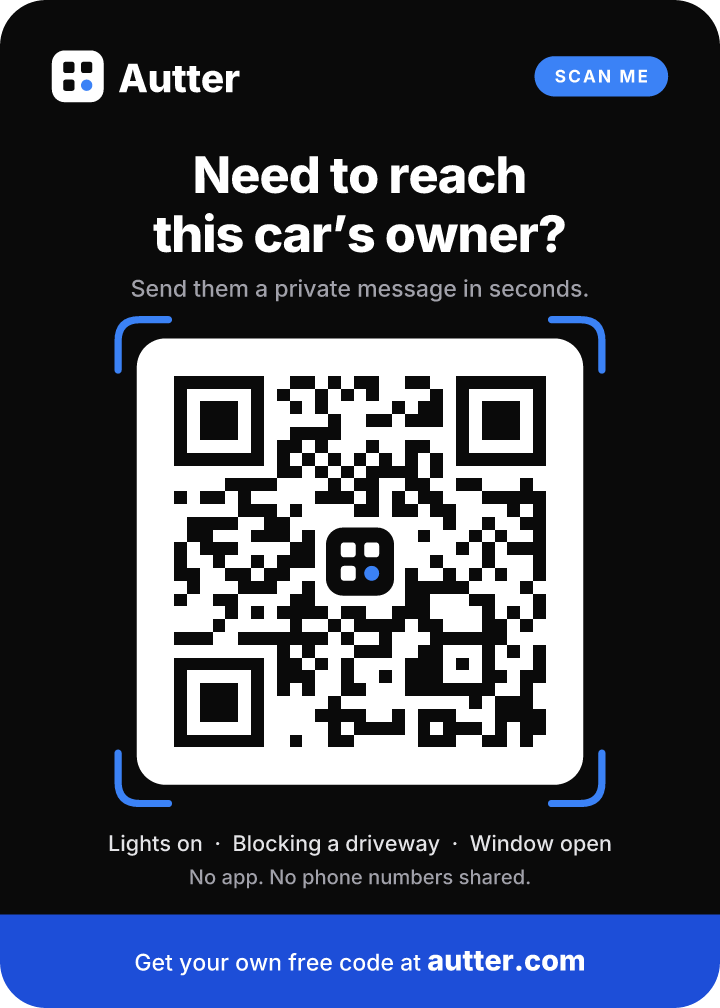
If a car is blocking your driveway, the quickest fix is to reach the driver: most blockers are a few doors away and move in minutes. If the car has a QR code like Autter's in the windshield, scan it and send a private alert. If it doesn't, call your city's non-emergency line (311 in many cities) to report it. Towing is the last resort, and the rules for it depend on where you live.
Updated October 2026
Blocked driveway in 30 seconds
- Parking across a driveway is illegal in most North American cities, even if it's only partly blocked.
- Call 311 or your local parking enforcement line, not 911, unless someone is in danger.
- In New York City, the police may ticket the car, and you can then have it towed at the owner's expense.
- Don't block the car in, touch it or leave threatening notes. It can backfire legally.
- A windshield QR code lets you reach the driver in minutes, without either of you sharing a phone number.
What counts as blocking a driveway?
A car is blocking a driveway when it stops you from getting a vehicle in or out. In most cities it doesn't have to cover the whole curb cut: parking partly across the opening, even by a foot, is usually enough for a ticket.
California's Vehicle Code is a typical example. It says no one may stop, park or leave a vehicle standing "in front of a public or private driveway" (section 22500(e)). Many cities add their own rules, like a minimum distance from the driveway's edge.
- Across the curb cut: almost always illegal, even for a minute.
- Partly over the opening: usually illegal if it narrows the way out.
- Next to the driveway, not over it: usually legal, even if it's annoying.
- Your own driveway: in some cities, even the homeowner can be ticketed for parking across their own curb cut on the street side.
What to do when someone blocks your driveway
Work from the friendliest option to the most serious one. Most of the time, step 1 or 2 solves it.
- 1Look for a way to reach the driver. Check the windshield and dashboard. If there's an Autter QR code, scan it with your phone camera, choose "You're blocking my car" and send. The owner gets a text alert right away.
- 2Ask around. If it's a neighbor's guest, a delivery or a contractor, a quick knock usually finds them.
- 3Call your city's non-emergency line. In many US and Canadian cities that's 311. They'll send parking enforcement or the police to ticket the car.
- 4Ask about towing. In some cities you can tow once the car has been ticketed. In New York City, NYC311 says that after the police ticket the car, you can call a private tow company or ask the precinct for a "rotation tow", and the owner pays the fees.
- 5Write down the details. Note the time, take a photo and keep any reference number. It helps if it keeps happening.
What not to do
It's tempting to teach the other driver a lesson. Don't. These moves can turn a parking problem into a police report against you.
- Don't box their car in with your own vehicle. You may be the one blocking traffic.
- Don't touch, push or damage the car. Keying, letting air out of tires or gluing notes to the glass is vandalism.
- Don't call a tow truck yourself without checking the rules. In many cities, a private tow from the street needs a ticket or police approval first.
- Don't leave your own phone number on an angry note. You'll get the argument, and the stranger keeps your number.
When it's a neighbor who keeps doing it
Repeat blockers are usually neighbors, their guests, or people using a shared driveway. A calm conversation works better than tickets. Pick a quiet moment, explain that you need to get out early, and agree on a signal for when the car needs moving.
Parking in front of your house, as opposed to across your driveway, is usually legal on a public street, even if it feels rude. If the curb in front of your home isn't legally yours, the city won't ticket the car.
A QR code helps here too. If both of you have one, "can you move your car?" becomes a 10-second message instead of a knock at 7 a.m. or a note under the wiper.
Condo garages, apartment lots and visitor parking
In a shared garage or lot, the car in your spot usually belongs to a neighbor's guest or a new resident. The building manager may not answer at 11 p.m., and a note on the windshield can sit there for days.
- Residents can put an Autter code in their windshield so neighbors can reach them about a blocked spot, lights left on or a leak under the car.
- Guests can do the same before visiting, so they're easy to reach if they park in the wrong place.
- Building rules still apply. For repeat problems or towing, go through the property manager.
Flip it around: make sure it's never your car that gets towed
Everyone blocks someone eventually: a tight street, a quick errand, a party, a moving day. What decides whether you get a polite message or a tow truck is whether the other person can reach you.
| Option | Can they reach you? | What they learn about you |
|---|---|---|
| Nothing in the window | No. Their only option is 311 or a tow. | Nothing, until the tow bill arrives |
| Phone number on the dashboard | Yes | Your number, for good, and so does every passerby |
| Autter QR code | Yes, with a private alert in seconds | Nothing. Not your name, number or plate |
An Autter QR code is a free sticker for your windshield. The person you're blocking scans it, picks a reason and you get a text. They never see your number, and you only see theirs if they choose to share it.
Blocked driveway questions
Who do I call if someone is blocking my driveway?
Call your city's non-emergency line or parking enforcement. In many US and Canadian cities that's 311. Call 911 only if someone's safety is at risk, for example if an ambulance can't get through.
Can I have a car towed from in front of my driveway?
Sometimes. It depends on the city. In New York City, NYC311 says that once police have ticketed the car, you can call a private tow company or ask for a rotation tow, and the vehicle's owner pays. Elsewhere, check your city's rules before calling a tow truck.
Is it illegal to partly block a driveway?
In most cities, yes. Laws usually say "in front of" a driveway, so covering part of the opening can still get a ticket. Your local rules have the final say.
Can I find the owner from the license plate?
Not as a private person, in most cases. In the US, the Driver's Privacy Protection Act limits who can get owner details from DMV records, and Canadian provinces restrict access too. Report the car instead.
How does Autter help with a blocked driveway?
If the blocking car has an Autter QR code, you scan it, pick "You're blocking my car" and the owner gets an alert right away. No app, no account, and neither of you sees the other's phone number unless you choose to share yours.
Be the driver people can reach.
A free QR code in your windshield turns a tow into a text message. Set up in about 60 seconds.
Get my free QR code